
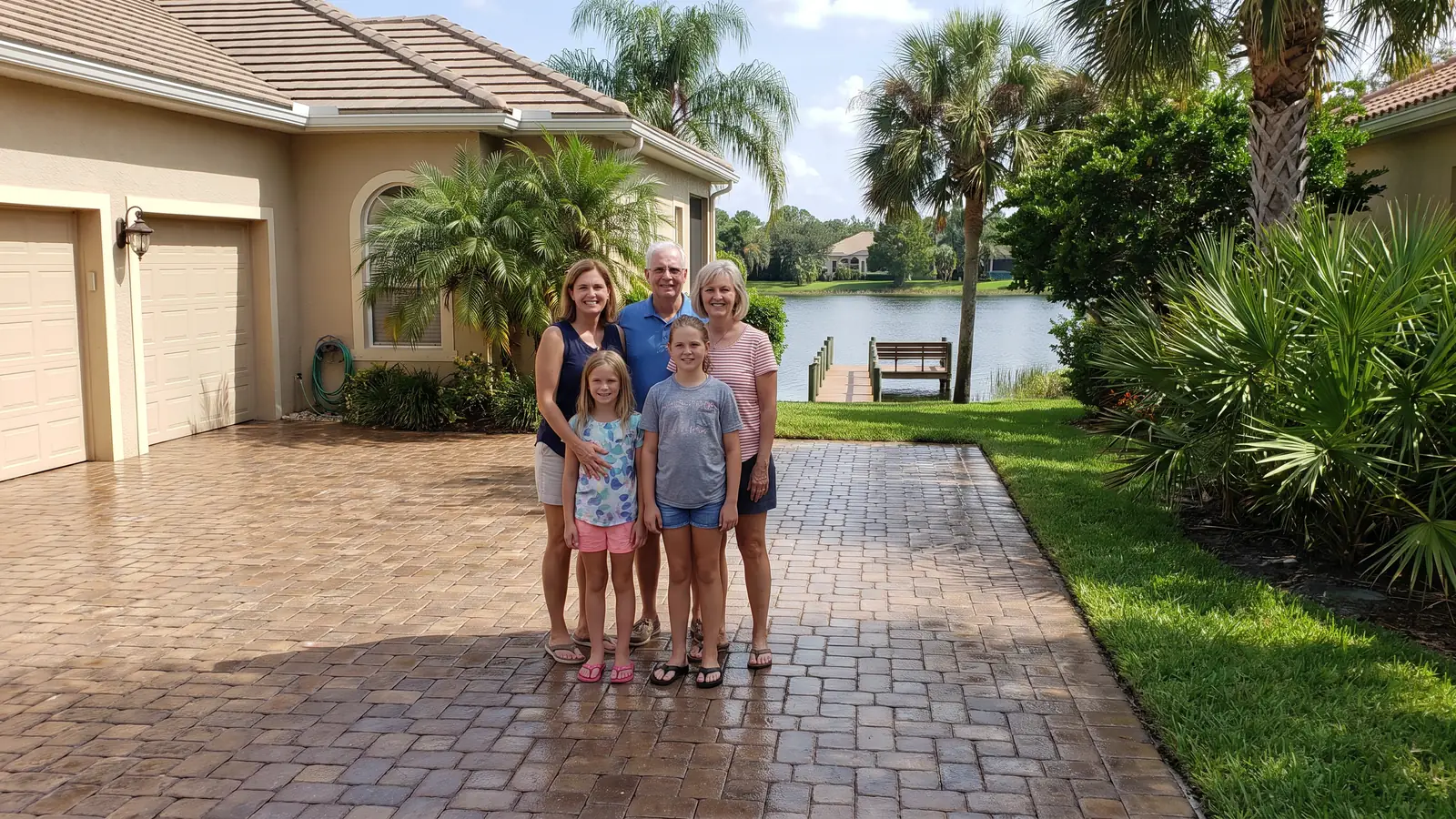
Stubborn rust, oil and leaf marks lifted from pavers
Paver Stain Removal in Lakeside, FL
Call (904) 606-1548 for a free estimate to remove rust, oil and leaf stains from your Lakeside pavers.
- Brings out deeper paver color
- Fresh joint sand helps lock pavers in place
- Gives weeds less room to grow
- Makes the surface easier to keep clean
- Free estimate, no obligation
Request a Free Estimate
Free, no obligation.
Can someone remove the stains on my Lakeside pavers, and how fast is the reply?
Yes, a local contractor can treat rust, oil and leaf stains on Lakeside pavers, and a reply reaches you inside 1 business day, usually much sooner. The look at your pavers and the written price are free, and no one is asking you to book. Call (904) 606-1548 and say which spot bothers you most.
Stains are not all the same, and the wrong fix can set one for good. A contractor who identifies the stain first can pick the right treatment, which means the mark lifts instead of spreading. Take a few close photos and a wide one, then get a free estimate.
What stained my Lakeside pavers: rust, oil, leaves or algae?
Most marks fall into a handful of kinds. Naming yours is the first step, and the contractor can confirm it on site. If you are unsure, call (904) 606-1548.
Orange or red rust
Usually iron from irrigation water, patio furniture or fertilizer. Cambridge Pavingstones tells homeowners to find the source first.
Dark oil spots
Drips from cars and grills soak into the pavers. Cleanfax says oil can spread below the surface past what shows on top.
Brown leaf and tannin marks
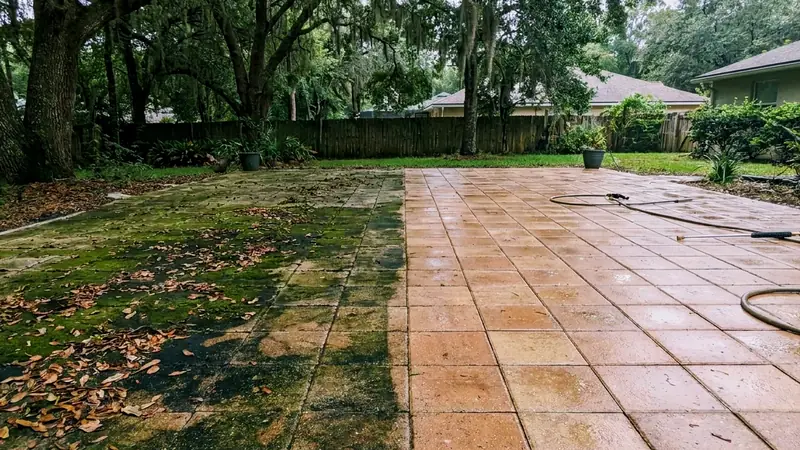
Fallen leaves and oak tannin leave brown streaks, and they return each season while the trees stay.
Green or black growth
Algae and mildew grow where shade and damp stay. This is a cleaning job, and it is a stain too.
White haze
Efflorescence is a salt that rises through new pavers. Unilock says it fades with time.
Old sealer patches
Cloudy or peeling coat can look like a stain, and it comes off in a different way.
Which Lakeside neighborhoods and nearby towns can book stain removal?
A local contractor covers Lakeside, Clay County and the towns across the river. Each name below links to a page with notes for that area, and the stain guidance here applies to all of them. For a street that is not on the list, call (904) 606-1548.
Why do Lakeside pavers get orange rust streaks near the sprinklers?
Iron carried in irrigation water is the usual cause. A First Coast washing company says irrigation rust shows up on paver aprons and needs a rust treatment, followed by a rinse. Cambridge Pavingstones lists three common sources: sprinklers, patio furniture and fertilizer. To have a streak matched to its source, call (904) 606-1548.
Sprinkler timers set the pattern. Well water and reclaimed water can both leave stains. A head that sprays pavers on every run paints the same stripe. Tell the contractor which zone reaches the stain when you get a free estimate.
Can bleach or a harder spray fix a stain?
No, and both can make things worse. Cleanfax warns that household bleach can turn a rust stain darker and larger and set it for good. The washing company adds that more pressure makes rust worse too. If someone has already tried either, say so when you call (904) 606-1548.
Hard pressure also strips joint sand and can scar softer pavers. Prosoco, a stone care maker, gives a working pressure of 400 to 1,000 psi for its degreaser, which is gentle by washer standards. Let the contractor pick the method, and get a free estimate.
How deep does an oil stain go in pavers?
Deeper than it looks. Cleanfax says oil soaks into porous material and the stain below can be much larger than the mark on top. Prosoco says a degreaser lifts surface oil and shows what has soaked deeper, and the deeper part needs a poultice. To have a spot checked, call (904) 606-1548.
A poultice is an absorbent material that draws a stain out as it dries. Prosoco gives 5 to 8 hours of drying and says severe stains can take more than one round, and Cambridge Pavingstones gives 6 to 8 hours for penetrated oil. A quick response limits how far oil spreads, so new drips are worth a call. Ask about old stains when you get a free estimate.
Does an old sealer change how stains come out?
It does. Cleanfax says coatings can block a treatment, so some have to be removed before the stain is worked on. Cambridge Pavingstones warns that its rust remover will damage sealer and says to test one or two pavers first. That is why the contractor checks for old sealer at the start. To book that check, call (904) 606-1548.
A Clay County paver company also says problem staining needs correction before the final sealing. A coat laid over a mark fixes it in place for years. The order of work is stain first, sealer last. For a plan in that order, get a free estimate.
What are the brown leaf and oak stains on my pavers?
Most are tannin, a brown dye that leaves live oaks and other trees leach out of leaves. A First Coast washing company says live oak tannin leaves brown stains on concrete and that a sealer helps keep them from setting in the next season. Cambridge Pavingstones notes that leaf stains come back every year. If oaks hang over your drive, call (904) 606-1548.
Shade makes it stick. The Clay County paver company says tree canopy keeps pavers wet longer, and wet pavers hold stains and grow algae. Trimming or sweeping leaves early helps more than any one cleaning. Mention the trees when you get a free estimate.
Is that white haze a stain?
Probably not. A chalky white film on newer pavers is often efflorescence, a salt that rises through the stone. Unilock says it fades in 2 to 3 months and can take up to a year, and that new pavers should wait 60 to 90 days before sealing. Time handles it, and sealing over it can trap it. To have a haze identified, call (904) 606-1548.
How does the paver stain removal process work, step by step?
The steps follow the stain. Cleanfax says to identify the stain before using any chemical, since the wrong one can set it. To see how it would go on your pavers, call (904) 606-1548.
1. Identify the stain
The contractor reads the color, the spot and the source to tell rust, oil, tannin and growth apart.
2. Test a small spot
A treatment goes on one or two pavers first. Cambridge Pavingstones advises this because some products harm sealer.
3. Treat the stain
Rust gets a rust treatment and oil gets a degreaser and, if it is deep, a poultice. Growth gets a gentle wash.
4. Rinse, dry and check
The area is rinsed and left to dry. The contractor looks for any shadow left behind.
5. Repeat or seal
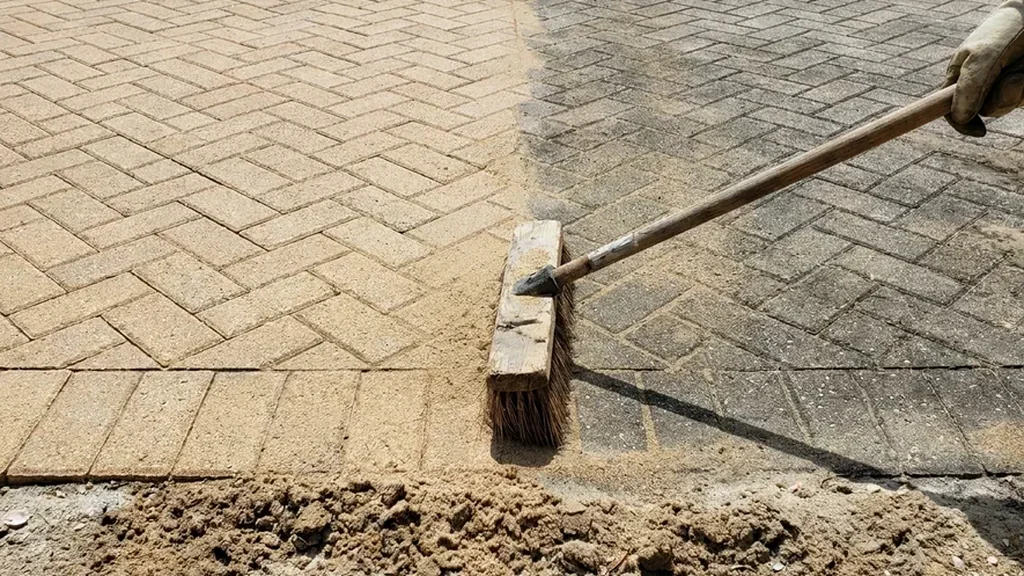
Stubborn marks may need another round. Once clean, a coat can go on to keep the next spill near the top.
What does paver stain removal cost in Lakeside?
No page found lists a stain removal rate per square foot, because the work depends on the stain. A First Coast company publishes $1.75 to $3.25 per square foot to clean, re-sand and seal, and the table uses that range for the whole area. Spot treatment is usually quoted on top. To get yours, get a free estimate.
A Southwest Florida guide lists wash only at $0.75 to $1.20 per square foot and says stripping is its own line item. For a small stain on a big driveway, the contractor may price the spot and leave the rest alone. Ask for the lines apart. Questions about a quote go to (904) 606-1548.
| Paved area | Typical Lakeside layout | Clean, sand and seal |
|---|---|---|
| 200 sq ft | Front walk with a few stained pavers | $350 to $650 |
| 400 sq ft | Driveway apron with sprinkler rust | $700 to $1,300 |
| 700 sq ft | Two car drive with oil and leaf marks | $1,225 to $2,275 |
| 1,000 sq ft | Driveway and pool deck together | $1,750 to $3,250 |
Math based on the $1.75 to $3.25 per square foot that a First Coast paver company published. No page for this area gives a stain only rate, so stain treatment is usually priced as an added line.
Which paver stains might never fully come out?
Some will not, and a straight contractor says so. Cleanfax warns that iron based stains may not come out at all, and that if two poultice rounds show no lightening, the stain may not be removable. A stain left for years goes deeper. For a fair read on yours, call (904) 606-1548.
If a mark will not lift, there are still choices. The contractor can lighten it, reseal the area for an even look or reset a stained paver. A paver swap is a repair that comes before sealing. To go over the options, get a free estimate.
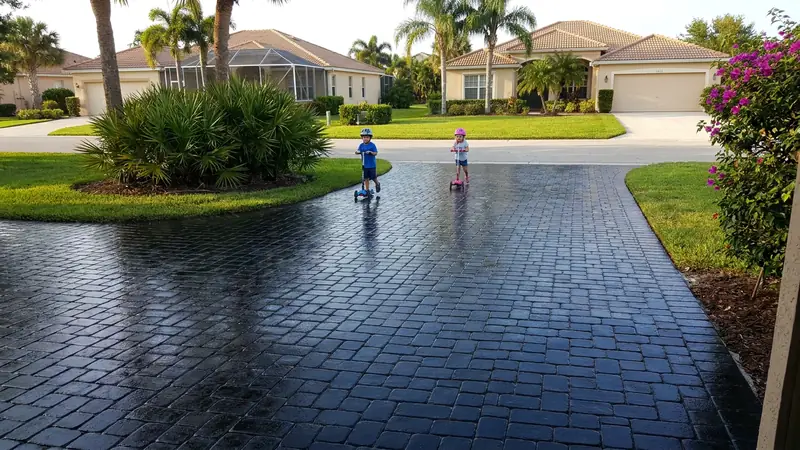
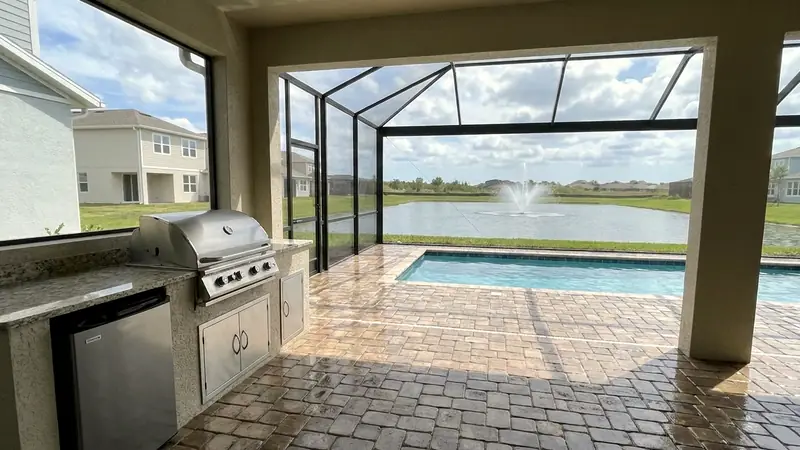
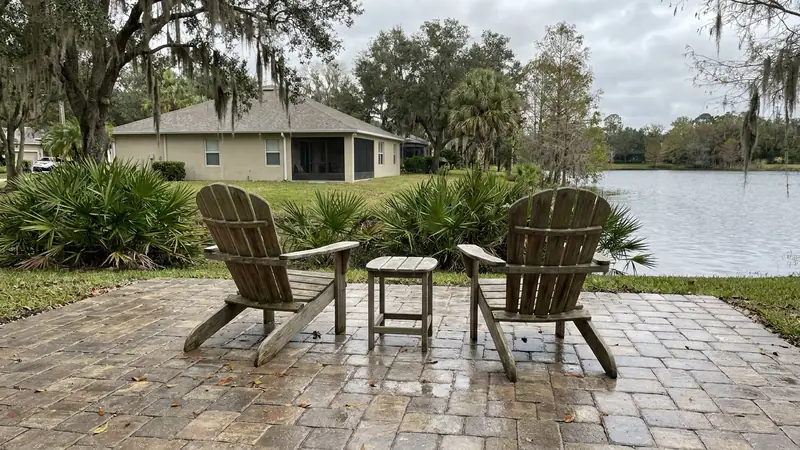
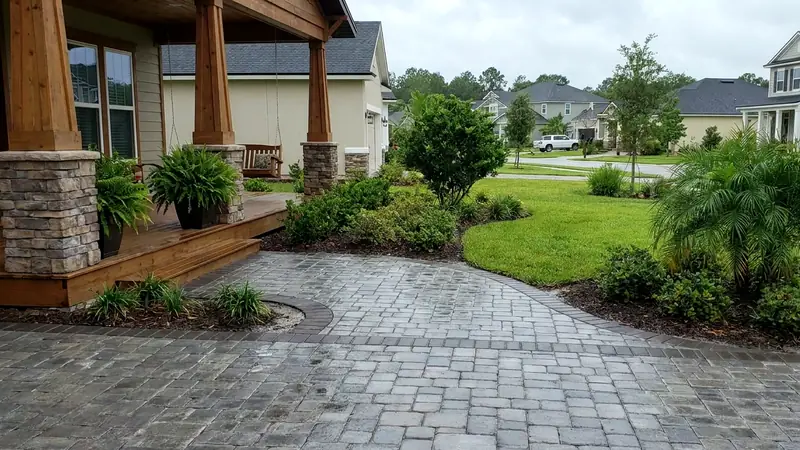
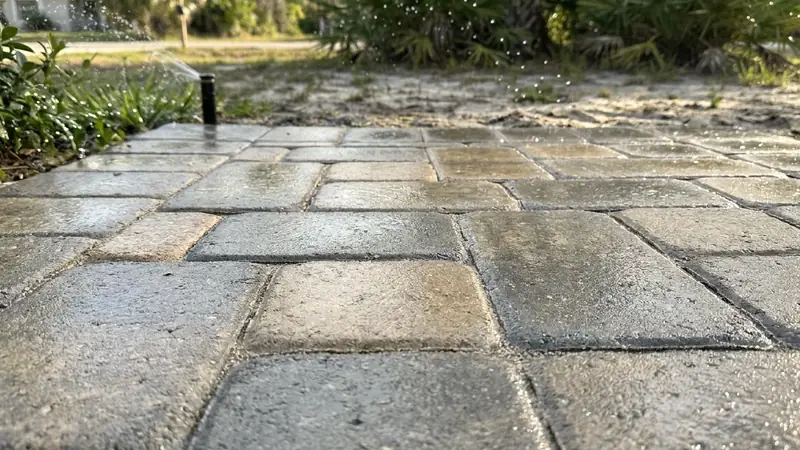
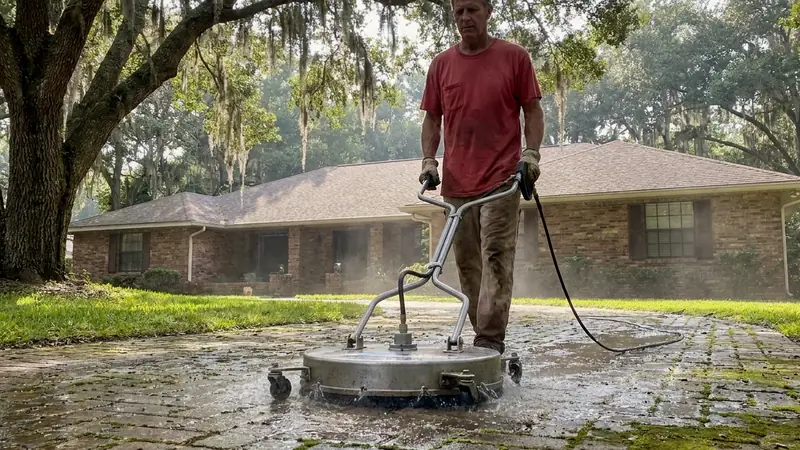
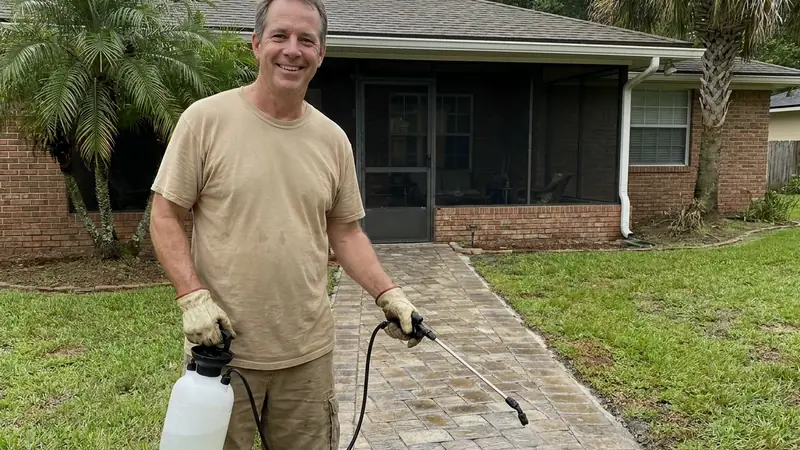
What do pavers look like after stain removal around Lakeside?
What should I ask before someone treats a stain?
Ask what the stain is, how it was identified and what product will go on. Ask for a test on one or two pavers, and ask what happens if the stain does not lift. Get any promise on the written estimate. For a quote with those lines, get a free estimate.
Ask about plants and the pool, too. Runoff from a treatment should not reach beds or water, and a contractor with a plan will say so. Call (904) 606-1548 to book the visit.
What do Lakeside homeowners ask about paver stain removal?
How much is it to clean pavers?
A First Coast company publishes $1.75 to $3.25 per square foot to clean, re-sand and seal. A Southwest Florida guide lists a wash only price of $0.75 to $1.20. Stain treatment is usually quoted on top, since it depends on the stain.
Is it good to seal pavers in Florida?
Once stains are treated, yes. A coat helps keep new spills near the surface, and a First Coast washing company says sealer helps keep oak tannin from setting in the next season. Sealing over a stain locks it in, so treatment comes first.
How do I remove oil stains from brick pavers?
Oil soaks in, so the approach depends on depth. Prosoco says a degreaser lifts surface oil and shows deeper stains, which then need a poultice that dries for 5 to 8 hours. A contractor tests a small spot first.
How much does it cost to clean and seal block paving?
Block paving is another name for pavers. The First Coast range for clean, re-sand and seal is $1.75 to $3.25 per square foot, which puts 400 square feet near $700 to $1,300. Stain work can be extra.
What are the orange stains on my pavers from the sprinklers?
Those are usually rust. A First Coast washing company says irrigation rust needs a rust treatment and a rinse, and that more pressure makes it worse. Cambridge Pavingstones says to find the source first, such as sprinklers, furniture or fertilizer.
Can bleach remove rust from pavers?
No. Cleanfax warns that bleach can make a rust stain darker and larger and set it for good. Rust gets a treatment made for iron, and a contractor tests it first.
Why do my pavers have brown leaf stains every fall?
Leaves and oak tannin leave brown marks that return as long as the leaves do. Cambridge Pavingstones says leaf stains come back each year, and a First Coast washing company says live oak tannin stains concrete.
Will a stain remover damage my sealer?
It can. Cambridge Pavingstones says its rust remover will damage sealer and says to test one or two pavers first. Cleanfax adds that coatings can block a treatment, so an old coat may need to come off.
Can every stain be removed?
Not always. Cleanfax says iron stains may not come out and that two poultice treatments with no lightening can mean the stain is not removable. A contractor tells you before you pay.
Which other paver services are available in Lakeside?
Stain removal often leads into another job. The pages below cover each one, and a contractor can price them together. To plan the order, call (904) 606-1548.
Ready to get rid of those stubborn marks?
Call or send the short form, and a local contractor answers inside 1 business day, usually sooner.
Free, no obligation